Methanesulfonic Acid or Methane Sulfonic Acid or Methanesulphonic Acid or Mesylate SDS MSDS of Manufacturers Exporters |
| Aadhunik Industries is a manufacturing group company. Aadhunik Industries is pioneer manufacturer and exporter of Methanesulfonic Acid or Methane Sulfonic Acid or Methanesulphonic Acid or Mesylate, Specialty Chemicals, Pharmaceutical Excipients, Food Fragrance & Flavor chemicals in India. It has toll manufacturers and representatives in UAE, Europe, Canada & USA and agents & customers in all countries like USA, Canada, Europe, UAE, South Africa, Tanzania, Kenya, Egypt, Nigeria, Uganda, Turkey, Mexico, Brazil, Chile, Argentina, Dubai, Netherlands, Italy, Spain, Germany, Portugal, France, Malaysia, Indonesia, Thailand, Korea, Japan, Russia etc. |
| Aadhunik Industries and/or associated units are FDA-GMP certified, Halal and/or Kosher certified, REACH registered, ISO-9001, ISO-22000 HACCP certified. We offer crystals granules in precise micron or mesh size as per buyers needs. We offer very high purity standards as per specifications required. |
 ----------
  ----------
  Translate


Methanesulfonic Acid or MSA or Methanesulphonic acid or Mesylate
SDS, Safety Data Sheet
MSDS Sheet, Material Safety Data Sheet 05-July-26
Section 1: Product and Company Identification
Product Name & Other Names: Methanesulfonic Acid or MSA or Methanesulphonic acid or Mesylate.
CAS No.: 75-75-2
EINECS, EC Number: 200-898-6
Relevant uses and uses advised against (if any): Industrial use only.
Supplier: As per letterhead
Section 2: Hazards Identification
GHS, Globally Harmonized System Classification in accordance with 29 CFR 1910
Classification according to Regulation (EC) No 1272/2008
Corrosive to metals Category 1, (H290)
Acute toxicity, Oral Category 4, (H302)
Acute toxicity, Dermal Category 4, (H312)
Skin corrosion Category 1B, (H314)
Specific target organ toxicity - single exposure Category 3, Respiratory system, (H335)
Labeling according to GHS & Regulation (EC) No 1272/2008
GHS Label Elements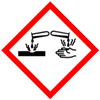 Corrosive |
Signal Words: Warning
Hazard statements:
H290: May be corrosive to metals.
H302: Harmful if swallowed.
H312: Harmful in contact with skin.
H314: Causes severe skin burns and eye damage.
H335: May cause respiratory irritation.
Precautionary statements:
P260: Do not breathe dust/fume/gas/mist/vapors/spray.
P261: Remove/Take off immediately all contaminated clothing.
P264 Wash thoroughly after handling.
P270: Do not eat, drink or smoke when using this product.
P271: Use only outdoors or in a well-ventilated area.
P273: Avoid release to the environment.
P280: Wear protective gloves/protective clothing/eye protection/face protection.
P330: Rinse mouth
P301+P312: IF SWALLOWED: Call a POISON CENTER or doctor/ physician if you feel unwell.
P302+P352: IF ON SKIN: Wash with plenty of soap and water.
P304+P340: IF INHALED: Remove victim to fresh air and keep at rest in a position comfortable for breathing.
P305+P351+P338: IF IN EYES: Rinse cautiously with water for several minutes. Remove contact lenses, if present and easy to do. Continue rinsing.
P332+P313: If skin irritation occurs: Get medical advice/attention.
P501: Dispose of contents/container in accordance with local/regional/national/international regulation.
Section 3: Composition / Information on Ingredients
Product Name & Other Names: Methanesulfonic Acid or MSA or Methanesulphonic acid or Mesylate.
CAS No.: 75-75-2
EINECS, EC Number: 200-898-6
Section 4: First Aid Measures
Always seek medical attention after first aid measures are provided.
Eyes: Immediately flush eyes with excess water for 15 minutes, lifting lower and upper eyelids occasionally.
Skin: Immediately flush skin with excess water for 15 minutes while removing contaminated clothing.
Ingestion: Call Emergency Medical immediately. Rinse mouth with cold water. Give victim 1-2 cups of water or milk to drink. Induce vomiting immediately.
Inhalation: Remove to fresh air. If not breathing, give artificial respiration.
Section 5: Fire Fighting Measures
It is not a flammable solid. However, it will burn at high temperature. When heated to decomposition, emits acrid fumes.
Suitable extinguishing media: Use water spray, alcohol-resistant foam, dry chemical, or carbon dioxide.
Unsuitable extinguishing media: Water, Foam. The product reacts with water and generates heat.
Special hazards arising from the substance or mixture: Carbon oxides, sulfur oxides.
Protective equipment and precautions for firefighters: Use foam or dry chemical to extinguish fire. Firefighters should wear full fire fighting turn-out gear and respiratory protection. Cool container with water spray. Material is not sensitive to impact or static discharge.
Special Information: In the event of a fire, wear full protective clothing and NIOSH-approved self-contained breathing apparatus with full face piece operated in the pressure demand or other positive pressure mode. At high temperatures under fire conditions, it may produce toxic or irritating fumes.
Section 6: Accidental Release Measures
Personal precautions, protective equipment, and emergency procedures: Ventilate area of leak or spill. Avoid breathing dust/fumes/gas/mist/vapors/spray. Use individual protective equipment (waterproof boots, suitable protective clothing, safety glasses, etc.).
Environmental precautions: Do not let the product enter drains, soil, or water sources.
Methods and materials used for containment Cleanup procedures and Storage: Contain spilled material. Cover with an inert, non-combustible absorbent material, (e.g. sand, earth, diatomaceous earth, vermiculite). Vacuum or sweep-up and remove to an approved disposal container.
Section 7: Handling and Storage Green
Precautions for safe handling: Apply according to good manufacturing and industrial hygiene practices. Ensure proper ventilation. Wash thoroughly after handling. Do not drink, eat, or smoke while handling. Minimize dust generation. Avoid breathing dust/fumes/gas/mist/vapors/spray. Avoid contact with eyes, skin, and clothing. Keep container tightly closed. Avoid ingestion and inhalation. Use individual protective equipment (waterproof boots, suitable protective clothing, safety glasses, etc.).
Conditions for safe storage, including any incompatibilities: Store in cool, dry, and ventilated area away from heat sources and protected from sunlight in tightly closed original container. Keep air contact to a minimum. Store protected from heat, sparks and ignition sources and incompatible materials. Avoid inhalation of dust/mist/vapor. Do not store with incompatible materials like strong oxidizing agents, alkalis, strong reducing agents, amines, hydrogen fluoride, acids, strong alkalis, bases, water.
Section 8: Exposure Controls / Personal Protection
Contains no substances with occupational exposure limit values.
Use ventilation to keep airborne concentrations below exposure limits. Have approved eyewash facility, safety shower, and fire extinguishers readily available. Wear chemical splash goggles and chemical resistant clothing such as gloves and aprons.
Exposure guidelines: Contains no substances with occupational exposure limit values.
Ventilation System: A system of local and/or general exhaust is recommended to keep employee exposures as low as possible.
Personal Respirators (NIOSH Approved): For conditions of use where exposure to the substance is apparent and engineering controls are not feasible, consult an industrial hygienist. For emergencies, or instances where the exposure levels are not known, use a full-face piece positive-pressure, air-supplied respirator.
Skin Protection: Wear impervious protective clothing, including boots, gloves, lab coat, apron or coveralls, as appropriate, to prevent skin contact.
Eye Protection: Use chemical safety goggles and/or a full face shield where splashing is possible. Maintain eye wash fountain and quick-drench facilities in work area.
Other Control Measures: Maintain good housekeeping in work area. Dust deposits on floors and other surfaces may pick up moisture and cause the surfaces to become slippery and present safety hazards. Handle in accordance with good industrial hygiene and safety practice.
Section 9: Physical and Chemical Properties
Physical state and appearance: Clear liquid.
Odor: around 1.48.
Odor threshold: No data found.
pH: No data found.
Relative density: around 1.48.
Melting Point: 20C.
Initial boiling point and boiling range: 167C @ 10mm Hg.
Flash point: 189C.
Auto-ignition temperature: >500C.
Decomposition temperature: No data found.
Upper/lower flammability or explosive limits: No data found.
Vapor pressure: No data found.
Vapor density: No data found.
Evaporation rate: No data found.
Flammability (solid, gas): No data found.
Partition coefficient: n-octanol/water: No data found.
Solubility(ies): Miscible with water. Miscible with methanol, diethyl ether. Immiscible with hexane.
Viscosity: No data found.
Section 10: Stability and Reactivity
Avoid heat and ignition sources.
Stability: Stable under normal conditions of use and storage.
Incompatibility: Strong oxidizing strong alkalis, strong reducing agents, amines, hydrogen fluoride, acids, strong alkalis, bases, water. Avoid various metals like iron, copper, brass, mild steel.
Hazardous decomposition products formed under fire conditions: Carbon oxides, sulfur oxides.
Section 11: Toxicology Information
LD50 oral, rat: 649 mg/kg.
LD50 dermal rabbit: > 1,000 mg/kg.
Carcinogenicity: Not defined as a carcinogen to humans by IARC, NTP, OSHA and ACGIH.
Mutagenic Effects: No data found.
Teratogenic Effects: No data found.
Developmental Toxicity: No data found.
Reproductive Effects: No data found.
Section 12: Ecological Information
Toxicity to fish: static test LC50 - Oncorhynchus mykiss (rainbow trout) - 73 mg/l - 96 h.
Toxicity to daphnia and other aquatic invertebrates: static test EC50 - Daphnia magna (Water flea) - 70 mg/l - 48 h.
Results of PBT and vPvB assessment: This substance/mixture contains no components considered to be either persistent, bioaccumulative and toxic (PBT), or very persistent and very bioaccumulative (vPvB) at levels of 0.1% or higher.
Section 13: Disposal Considerations
Check with all applicable local, regional, and national laws and regulations.
Section 14: Transport Information
DOT USA, TDG Canada & ADR/RID Europe:
UN number: 3265
UN proper shipping name: CORROSIVE LIQUID, ACIDIC, ORGANIC, N.O.S. (Methanesulphonic acid)
Class: 8, Packing Group: II.
IMDG/IMO & IATA:
UN number: 3265
UN proper shipping name: CORROSIVE LIQUID, ACIDIC, ORGANIC, N.O.S. (Methanesulphonic acid)
Class: 8, Packing Group: II.
Section 15: Regulatory Information
No further information is available.
Section 16: Other Information
Disclaimer:
**************************
Our company provides this MSDS sheet in good faith but makes no representation as to its comprehensiveness or accuracy. This SDS sheet is intended only as a guide to the appropriate precautionary handling of the material by a properly trained person using this product. The above information has been compiled from various sources and has the possibility of discrepancy and being out-dated information. Individuals receiving the information must exercise their independent judgment and do further search in determining its appropriateness for a particular purpose. In no case shall our company be liable to loss or damages by the product user.
**************************
CAS Number 75-75-2, Methanesulfonic Acid or Methane Sulfonic Acid or Methanesulphonic Acid or Mesylate manufacturers suppliers exporters at:
manufacturer supplier exporter
Aadhunik Industries
Ankleshwar Gujarat & Mumbai, India
TEL: (OFFICE) 91-22-65290104, 91-22-65290105.
e-mail: info@aadhunikindustries.com

Copyright and Usual Disclaimer is Applicable. 5-07-2026
Acetic Acid Glacial ------- Ammonium Bicarbonate ------- Aluminum Chloride ------- Aluminium Potassium Sulphate ------- Ammonium Carbonate ------- Ammonium Carbamate ------- Ammonium Chloride ------- Ammonium Persulfate------- Barium Chloride ------- Benzyl Alcohol ------- Benzoic Acid ------- Boric Acid ------- Borax ------- Calcium Chloride ------- Calcium Oxide ------- Calcium Hydroxide ------- Calcium Lactobionate ------- Calcium D Saccharate ------- Calcium Sulfate ------- Carbamide Peroxide ------- Chromic Chloride -------Copper Cupric Chloride ------- Copper Sulphate ------- Precipitated Coated & Directly Compressible Calcium Carbonate ------- Fumaric Acid ------- Ferric Chloride ------- Formaldehyde Solution ------- Lithium Carbonate ------- Magnesium Chloride ------- Magnesium Sulphate ------- Maleic Acid ------- Malic Acid ------- Manganese Chloride ------- Manganese Sulphate ------- Octyl Dodecanol ------- Oleic Acid ------- Phenyl Ethanol ------- Potassium Bromide ------- Potassium Chloride ------- Potassium Hydroxide Pellets ------- Potassium Monopersulfate ------- Potassium Phosphate Monobasic Dibasic Tribasic ------- Propylene Carbonate ------- Selenious Acid ------- Sodium Acetate ------- Sodium Diacetate ------- Sodium Hydroxide Pellets------- Sodium Thiosulfate ------- Sodium Formaldehyde Bisulfite ------- Sodium Perborate ------- Vanadyl Sulfate ------- Zinc Chloride